Well, summer is here and I finally have time to catch up on my blog reading and blog writing. After skim reading about 100 blog posts from the Partnership fro a Drug-Free America, here are some of the articles and links that I thought were the best and the most important for parents and teens in our community. Take a moment today or this week and read these articles. Great information for parents and our teens. Thanks!
Kids at Risk of Overdose due to Parent Medications
---Very important read for all of us. I take 2 medications daily and try my best to keep these away from my own little 4 children. But as they get older, I need to protect this medication even more to keep them away from possible danger.
Social Hosting Laws:
---Although Iowa apparently has no statewide Social Hosting laws according to this interactive website, it reminds you that local communities may. Not to mention the emotional damage that can occur if you were to allow underage teens to drink at your house, especially if they drive after that drinking.
Smoking continues to decline among teens, but drinking and binge drinking gets worse
---Good news on smoking, but bad news on drinking and binge drinking.
Myths BUSTED when it comes to parents who think letting their kids drink at home is safe and OK!
---This is a great article that shows all the myths of letting your kids drink at home as a safe way for them to learn about alcohol.
Did you know teens are using ADHD drugs to study? Most parents don't.
---10% of high school kids are doing this, but only 1% of parents think it is their child. Interesting....
Starting to drink at young age makes for heavy drinking later.
--Last article, but it is an important one.
Have a great summer and check back here often for many other updates I find as I read up on my blogs and studies on the Internet.
Showing posts with label prevention. Show all posts
Showing posts with label prevention. Show all posts
Tuesday, June 4, 2013

Sunday, February 10, 2013
Two New Sites, Both Great for Local Teens and Their Parents
A couple of new sites popped up towards the end of 2012 and both are really, really good for our teens in our school district AND their parents. Check them out!
Warren County Standing Together on Prevention (WC STOP): This local group made of educators, law enforcement, leaders, parents, and community members has been working very hard for a couple years now to get drugs and alcohol out of our young peoples hands and bodies so that they can be successful, healthy, and make positive choices as they go through each and every day. They do this and so much more. And the best part is that anyone can be a part of their group, all you need is a passion to educate people in our county and beyond about the dangers affecting our young people. Check out their website and the many resources located across the top of their page. Upcoming meeting date/times are also located near the bottom of their page.
I AM in Control Website for Teens: This website is not just for teens by the way, I think parents and educators can benefit from the information posted as well. Basically a collection of blogs written by teens and adults with advice for teens, this website updates multiple times each week with information and advice for teens. Some of the content is great for teens to read on their own and some would be better for an adult to read and discuss with them. But all of the information is very current and relevant to our teens' lives. As a bonus feature, teens can online chat or call counselors located at Iowa State University and know they are getting professional advice and help on the other side of the line when they connect with them and want to discuss an issue they are struggling with. Great website!
Wednesday, October 17, 2012
Red Ribbon Week Next Week, But Wear Red This Friday!

Although Red Ribbon Week starts next week, at Carlisle we like to "kick" it off a little early. Red Ribbon Week has a tradition of wearing red on Friday, but we do not have school next Friday. So we are asking our students, faculty, parents, and community to wear red THIS Friday, October 19th to get us off to a good start. Since we are playing our rival Norwalk in the regular season football finale, this is another great reason to wear red on Friday. If you are wondering what Red Ribbon Week is, here is a little blurb we put in the Wildcat Weekly this week:
KICKOFF RED RIBBON WEEK
Red Ribbon Week is being celebrated October 23rd– October 31st. As a kickoff to Red Ribbon Week we would like all students, teachers, and community members to WEAR RED on Friday, October 19th. The Carlisle High School Students Taking Action Not Drugs (STAND) group will be conducting activities throughout the week to spread awareness about the harmful effects of substance use to students in the district. This year’s theme is “PAWS-itively Drug Free.”
Red Ribbon Week was originally created to honor the memory of U.S. Special Agent Enrique “Kiki” Camarena, who gave his life in the fight against drugs. He was killed after discovering a multibillion dollar drug ring in Mexico that slipped drugs over the border and had a history of violent encounters. The week has since evolved into a country-wide week dedicated to preventing drug use and showing the pledge that many
students have taken to stay drug free.
Red Ribbon Week Website for more information
Monday, October 1, 2012
Updates from "Partnership for a Drug Free America" Blog
As I get caught up on my blog reading again, I ran across several good and interesting articles on the Partnership for a Drug Free America blog. I have placed the blog links below. Please click on them and give them a read if the topic interests you. Also, consider following the Partnership for a Drug Free America blog as it routinely has great information and updates nearly daily.
Empowering Youth to Prevent Underage Drinking click here. This article talks about how all of the stats about teens doing drugs or drinking alcohol doesn't always remind you that because the percentages are low, that means the majority of students are doing the right thing and making the right choices. Give this article a quick read to see how students can be the solution to the problem of teens using and abusing drugs and alcohol.
American Smokers Using Less Cigarettes click here. Good news about cigarette smoking in the United States.
Teens Struggle with Quitting Smoking click here. Even though the article above is good news, this article shows you how powerful the addiction to cigarettes can be, especially in teens. Cigarettes simply can't be something you experiment with as you can get hooked and addicted with just one puff.
Drug Known as "Smiles" Being Linked to Hollywood Death
Michael Wenger, a Prevention Specialist here in Warren County and an active leader and member of Warren County's STOP group sends out great information to those on his email list throughout the year. I just received the 2nd or 3rd email in the past week talking about the dangers of a new synthetic drug and this time the damage is making national news due to its role in a celebrity death and possible murder. Please see the article below to hear about the real dangers of this "nice" sounding synthetic drug.

'Smiles': New street drug tied to 'Sons of Anarchy' death
Matt Carr / Getty Images file
Actor Johnny Lewis, 28, who starred in the series "Sons of Anarchy."
By Brian Alexander, NBC News Contributor
Johnny Lewis, an actor in the popular “Sons of Anarchy” motorcycle-gang cable drama, died early Wednesday in Los Angeles, suspected of killing his 81-year-old former landlord, Catherine Davis, and possibly himself.
Police think the 28-year-old rising star, who played Kip 'Half-sack' Epps on the FX show, may have been under the influence of a drug few have heard of, a substance known informally as “Smiles.”
It’s part of a new wave of synthetic drugs finding their way onto America’s streets and into its clubs. With the chemical name 2,5-dimethoxy-4-
While Smiles may seem obscure, it’s already done damage, and not just in drug-hip Hollywood.
When 18-year-old Adam Budge of East Grand Forks, Minn., gave a derivative of the Smiles drug to his buddy, 17-year-old Elijah Stai, of nearby Park Rapids this year, Stai wound up dead. The drug was supposed to be a cheap, harmless high. But within an hour of mixing the powder into some chocolate and eating it, Stai was convulsing, hallucinating, and eventually stopped breathing. Now Budge faces charges that could put him in prison for many years.
But what is Smiles?
Like all the 2C drugs, it’s a psychoactive, hallucinogenic chemical that alter the brain’s balance of dopamine and serotonin. Smiles is particularly powerful, binding to serotonin receptors in the brain at 20 times the rate of another drug used in schizophrenia research, according to an experiment performed by Purdue University chemists.
The effects of 2C-I, like those of LSD, can last up to eight hours. But because the effects can take time to appear, users may think they haven’t taken enough to get the desired high, and so take more, risking overdose.
The drug can be taken as small tablets, on pieces of blotter paper like LSD, or in powder form, often mixed with something else, like chocolate.
In June, as part of a Substances Control Act overhaul, Congress made 2C-I a schedule I drug -- highly restricted, like methamphetamine. But, explained Drug Enforcement Administration spokesperson Rusty Payne, trying to get government arms around these new drugs is “like playing whack-a-mole. There are just so many emerging chemicals.”
Labs, often located in Europe or Asia, can use legal, common chemicals to produce huge batches of the drugs. Once one formulation is discovered, and banned, all the chemists have to do is slightly alter the structure of the molecules to create another, potentially legal, substitute until that one is banned.
There is no known geographic hot spot for the 2C drugs, unlike, say, methamphetamine, which became known as a rural, small-town problem. The U.S. Drug Enforcement Administration believes that most, if not all, the 2C drugs are being imported to the country, not made domestically.
Often, Payne said, teens rationalize the use of the drugs because they think, or are told, that it’s legal and if it’s legal, it’s safe. Another problem is that users often think they’re taking something else.
“We are getting so many calls because people are dying abusing chemicals that nobody ever heard of,” Payne said. “They’re told it’s harmless. If you can just go buy it somewhere, or on the internet, then it must be safe, but nothing could be further from the truth.”
Users aren’t the only ones who are often in the dark. According to Payne, even the DEA’s own agents are behind the curve when it comes to designer synthetics.
“It’s tough for our agents to stay up to date,” he explained. “Chemicals that used to take years to synthesize now take months. And many chemicals are diverted” from legal uses to illicit ones.
Chemical and pharmacologic research appears in journals, is posted online, and becomes easily available to all. That is often a good thing, but it also allows rogue chemists to use the science to create new analogs of drugs like 2C-I.
The drug “Spice,” for example, which made headlines over the past two years as a marijuana substitute, began as a research project by a Clemson chemist named John W. Huffman. He was doing the research under the auspices of the National Institute for Drug Abuse.
“This synthetic stuff is the new frontier of drugs,” Payne said.
Brian Alexander (www.BrianRAlexander.com) is co-author, with Larry Young Ph.D., of "The Chemistry Between Us: Love, Sex and the Science of Attraction," (www.TheChemistryBetweenUs.com
Friday, September 14, 2012
As Suicide Prevention Awareness Week Comes to a Close, Bring Someone Out of the Darkness
Short and simple video that has nothing to do with Suicide Prevention Awareness, just a great invention that is helping people enjoy a simple luxury: light in their house. But wait....does this have meaning to Suicide Prevention Awareness Week? I think so. I think we can all do something simple to provide light in people's life. I think we can seek people out who live in darkness and help them. And I don't think it takes a special person or a genius mind, I think it just takes a small amount of time to find someone who is in a dark place and try to help them see the light. We can all help be a part of the solution. Have a great weekend!
Sunday, April 1, 2012
April is "Child Abuse Prevention Month"
Just a quick blog post letting everyone know that April is National Child Abuse Prevention Month. There has been a lot of national media coverage on recent high profile child abuse, especially cases that are sexual in nature. But that is only one type of child abuse. Child abuse could be neglect, physical abuse, emotional abuse, or even verbal abuse. As a counselor, I think psychological and verbal abuse seems to sometimes be the most damaging and is the type of abuse I see the most often. No matter what type of abuse we are talking about, as adults and even as kids, we must all work together to stop this abuse and help the kids. We must also help educate and communicate with the abuser so that future abuse does not occur and the abuser can learn to cope with their anger, hurt, sadness, and any other issues using safer and healthier methods. For more information on National Child Abuse Month, please visit the National Child Abuse Prevention Month website by clicking here!
Here are some other links you can click:
Wide variety of "Tip Sheets" for Parents, Educators, Caregivers
Wide variety of information about Child Abuse and Neglect
Some powerful and eye-opening stats when it comes to Child Abuse
Here are some other links you can click:
Wide variety of "Tip Sheets" for Parents, Educators, Caregivers
Wide variety of information about Child Abuse and Neglect
Some powerful and eye-opening stats when it comes to Child Abuse
Sunday, February 19, 2012
Quick Q&A on K2 and Bath Salts
Ran across these Q&A blog posts from the Partnership for a Drug-Free America blog. Good, quick information. Please visit their blog (Click here!) or follow their blog to stay up to date on the latest information and battles to keep our teens and even adults drug-free!


K2 – Spice
What are the street names/slang terms?
The most common names for synthetic marijuana are K2 and Spice, but it is also sold as Bliss, Black Mamba, Bombay Blue, Blaze, Genie, Spice, Zohai, JWH -018, -073, -250, Yucatan Fire, Skunk and Moon Rocks.
What is synthetic marijuana?
K2 or Spice is a mixture of herbs, spices or shredded plant material that is typically sprayed with a synthetic compound chemically similar to THC, the psychoactive ingredient in marijuana.
What does it look like?
K2 is typically sold in small, silvery plastic bags of dried leaves and marketed as incense that can be smoked. It is said to resemble potpourri.
How is it used?
K2 products are usually smoked in joints or pipes, but some users make it into a tea.
What are its short term effects?
Short term effects include loss of control, lack of pain response, increased agitation, pale skin, seizures, vomiting, profuse sweating, uncontrolled / spastic body movements, elevated blood pressure, heart rate and palpitations. The onset of this drug is 3-5 minutes, and the duration of the high is 1-8 hours.
In addition to physical signs of use, users may experience: dysphoria, severe paranoia, delusions, hallucinations and increased agitation.
In addition to physical signs of use, users may experience: dysphoria, severe paranoia, delusions, hallucinations and increased agitation.
What are its long term effects?
Unknown
What is its federal classification?
On March 1, 2011, DEA published a final order in the Federal Register temporarily placing five synthetic cannabinoids into Schedule I of the CSA. As a result of this order, the full effect of the CSA and its implementing regulations including criminal, civil and administrative penalties, sanctions, and regulatory controls of Schedule I substances will be imposed on the manufacture, distribution, possession, importation and exportation of these synthetic cannabinoids.
Source: Drug Enforcement Administration (DEA), National Institute on Drug Abuse, American Association of Poison Control Centers
Bath Salts
What are the street names/slang terms?
Bath Salts are sold under a number of different “brand” names, and as different products, such as plant feeder or insect repellent. Brand names include: Bliss, Blue Silk, Cloud Nine, Drone, Energy-1, Ivory Wave, Lunar Wave, Meow Meow, Ocean Burst, Pure Ivory, Purple Wave, Red Dove, Snow Leopard, Stardust, Vanilla Sky, White Dove, White Knight, and White Lightning.
What arebath salts?
Bath Salts are substituted cathinones, which are synthetic, concentrated versions of the stimulant chemical in Khat. Methylenedioxypyrovalerone (MDPV), mephedrone and methylone are the chemicals most often found in Bath Salts.
What does it look like?
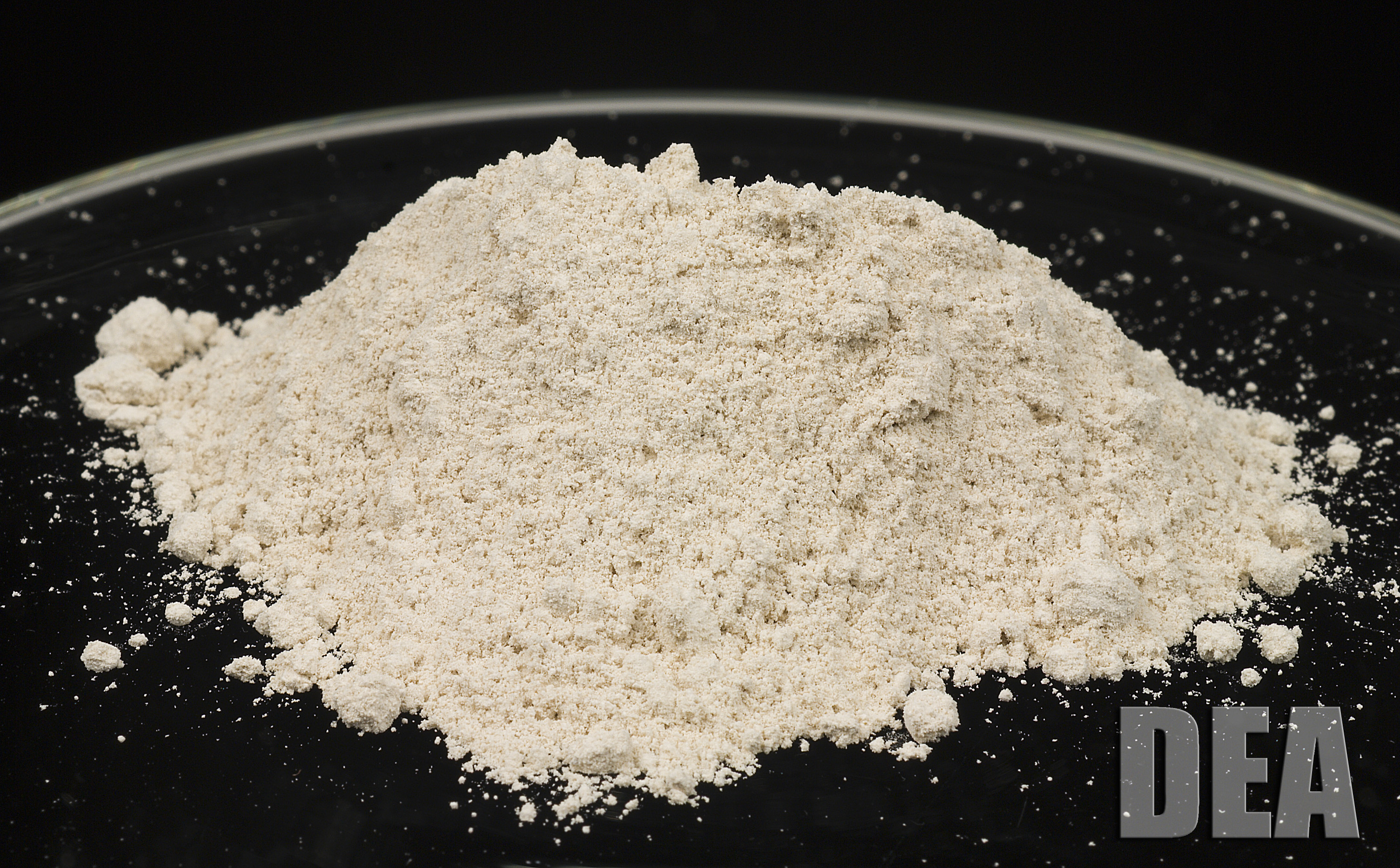
Bath Salt products are sold in powder form in small plastic or foil packages of 200 and 500 milligrams under various brand names. Mephedrone is a fine white, off-white or slightly yellow-colored powder. It can also be found in tablet and capsule form. MDPV is a fine white or off-white powder.
K2 is typically sold in small, silvery plastic bags of dried leaves and marketed as incense that can be smoked. It is said to resemble potpourri.
How is it used?
Bath Salts are usually ingested by sniffing/snorting. They can also be taken orally, smoked, or put into a solution and injected into veins.
What are its short term effects?
Short-term effects include very severe paranoia that can sometimes cause users to harm themselves or others. Effects reported to Poison Control Centers include suicidal thoughts, agitation, combative/violent behavior, confusion, hallucinations/psychosis, increased heart rate, hypertension, chest pain, death or serious injury. The speed of onset is 15 minutes, while the length of the high from these drugs is 4-6 hours.
What are its long term effects?
Unknown
What is its federal classification?
On October 21, 2011, DEA published a final order in the Federal Register exercising its emergency scheduling authority to control three of the synthetic stimulants that are used to make bath salts. As a result of this order, these synthetic stimulants are designated as Schedule I substances under the Controlled Substances Act.
Source: Drug Enforcement Administration (DEA), American Association of Poison Control Centers
Synthetic Drugs in the News, Causing Sickness and Death, and Now a Great Powerpoint to Learn More!
The news broke this weekend that 3 students from East High School were taken to the hospital due to "poisoning" and supposedly got "poisoned" by smoking a synthetic drug called K2/Spice. Click here to read the story. Synthetic drugs like K2, Spice, and Bath Salts are some scary stuff. Kids can get their hands on them fairly easy, each time a kid tries them the affects can be different, and the products are not technically meant to be consumed or smoked to begin with. And the stories I have heard from medical professionals and other counselors make me wonder if these synthetic drugs aren't the worst drug out there affecting our teens. But the good news is that their is information out there to help us learn more. A great resource to start with is this powerpoint. Please click through this powerpoint and educate yourself and your child about the dangers or these "seemingly harmless" drugs. They are not harmless....they are dangerous and possibly deadly
Parents360 Synthetic Drugs (Bath Salts & K2 / Spice)
View more webinars from The Partnership at Drugfree.org
Wednesday, February 15, 2012
Some Alarming Marijuana Facts
Michael Wenger, who heads up Warren County's STOP (Warren County Standing Together on Prevention) coalition that tries to combat drug use and abuse in Warren County just sent out some pretty alarming facts about marijuana use in Iowa and around our country. I have copy and pasted it below. If you want to follow this great group made up of Warren County residents, they have a facebook page: CLICK HERE!
Marijuana Facts:
Iowa Facts
Marijuana is the most used illicit drug by Iowa teens. 26% of Iowa 11th graders say they’ve used marijuana. [Iowa Youth Survey, 2010]
Marijuana is the most common form of substance abuse among Iowa youth and adults. Over two-thirds (65%) of Iowa juveniles and nearly one-fourth (22%) of Iowa adults in treatment say marijuana is their primary substance of abuse. [Iowa Department of Public Health, 2011]
Marijuana is already perceived as accessible to many young Iowans. 50% of 11th graders say it would be easy or very easy for kids their age to get marijuana in their neighborhood or community. [Iowa Youth Survey, 2010]
Marijuana is, by far, the most common illicit substance detected in workplace drug tests. During the most recent seven year period for which reports are available, 7,391 Iowa employees tested positive for marijuana, or 59.6% of all positive workplace drug test results. [Iowa Department of Public Health, 2008]
Marijuana is often used by methamphetamine users in Iowa. Many of the same criminal groups that smuggle meth into the State also bring and sell marijuana, and when conducting meth investigations Iowa law enforcement officers frequently find marijuana present too. [Iowa Department of Public Safety, 2010]
Marijuana does have the potential for abuse…It is a valid risk…There is a physiological dependence…When dealing with the raw marijuana, you can’t control the dose…It needs to stay a Schedule I because the product can’t be delivered in exactly the same way every time…If I had small children, I wouldn’t want them exposed to someone who is smoking it…There are abuses of marijuana in the states that have “medical marijuana” programs…Over 30% of the written comments we received were just people wanting to smoke pot. [Sampling of concerns voiced by Iowa Board of Pharmacy members on February 17, 2010]
U.S. Facts
The Institute of Medicine concluded that smoking marijuana is not recommended for any long-term medical use, and a subsequent IOM report declared, “marijuana is not modern medicine.”
The federal agency responsible for approving drugs as safe and effective issued an advisory stating it has NOT approved smoked marijuana for any medical condition or disease indication. It noted “there is currently sound evidence that smoked marijuana is harmful.”
According to the Food and Drug Administration, voter measures on “medical marijuana” are inconsistent with efforts to ensure medications undergo the rigorous scientific scrutiny of the FDA approval process and are proven safe and effective under standards of the Food, Drug and Cosmetic Act.
A synthetic version of tetrahydrocannabinol (THC), the psychoactive ingredient in marijuana, already is approved by the FDA and legally available in pill form as Marinol, for use in amounts as prescribed by physicians whose patients suffer from pain and chronic illness.
Clinical trials on a mouth spray—called Sativex—containing THC and cannabidiol (CBD), a non-psychoactive ingredient in marijuana, have been completed and results are under review by the FDA. This formulation and delivery system may enhance pain relief, minimize unwanted side effects and regulate how THC enters the bloodstream.
The 2009 National Survey on Drug Use & Health (NSDUH) shows past-month marijuana use among 12-17 year olds rose 9% vs. 2008, coinciding with a softening of youth attitudes about marijuana risks. The 2006-2007 NSDUH State Estimates of Substance Use show perception of risk for smoking marijuana once a month among 12-17 year olds is lowest in 13 states with “medical marijuana” laws. Similarly, 10 of the 15 states with the highest percentage of past month teen marijuana users are states with “medical marijuana” laws. [White House Office of National Drug Control Policy, 2010/Partnership for a Drug-Free America, 2009]
The 2010 Partnership Attitude Tracking Study shows past year marijuana use rose 22% from the year before. This coincides with negative shifts in teen attitudes, particularly a growing belief in the acceptability of drug use. The study shows more teens—52%—agree “being high feels good,” more—71%—say “kids use alcohol because it is fun,” and fewer teens—30%—agree strongly they “don’t want to hang around drug users.” [The Partnership at Drugfree.org, 2011]
Marijuana smokers can have many of the same respiratory problems as tobacco smokers. Workplace studies associate workers’ marijuana smoking with 55% more industrial accidents, 85% more injuries, a 75% increase in absenteeism, more tardiness, more workers comp claims, and higher job turnover compared to non-smokers. [National Institute on Drug Abuse, 2009]
Long-term marijuana abuse can lead to addiction. When trying to quit, long-term marijuana abusers report irritability, sleeplessness, decreased appetite, anxiety, and drug craving, all of which make quitting difficult. [National Institute on Drug Abuse, 2009]
Marijuana legalization, for any purpose, remains a non-starter in the Obama Administration. [White House Office of National Drug Control Policy, 2009]
Marijuana seized now is more potent than marijuana of the 1960s and 1970s. THC levels of tested marijuana samples increased 103% from 1998 to 2008. This increase in potency makes marijuana a much more dangerous drug that can cause a host of physical and psychological problems, including addiction. [White House Office of National Drug Control Policy, 2010]
Subscribe to:
Posts (Atom)